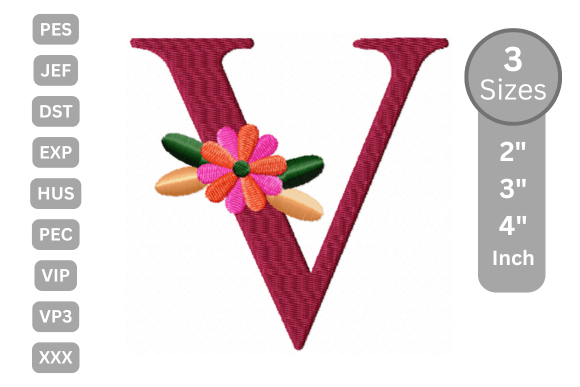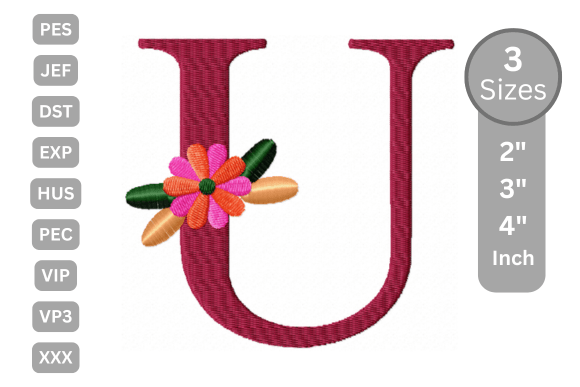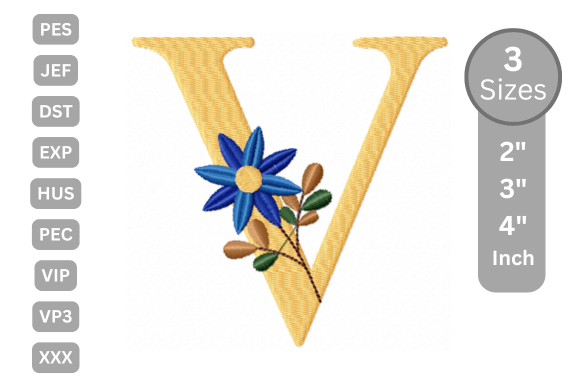
Botanical Flower Letter - V
First Impression: Elegant, Soft, and Thoughtfully Balanced
As an embroidery designer who’s curated over 200 craft fair booths in the past decade, my gut reaction to Botanical Flower Letter - V is immediate: it reads as quietly confident—not loud, not trendy, but enduring. The combination of a serif letterform with a botanical flower accent suggests refined femininity without leaning into cliché. It’s neither overly rustic nor aggressively modern—it lands in that sweet spot where handmade quality feels intentional and elevated. Customers browsing a crowded market aisle won’t stop for noise; they pause for harmony. And Botanical Flower Letter - V delivers that.
Where It Shines on Craft Fair Products
This design excels when paired with products that invite close inspection and personal connection—exactly what handmade shoppers seek at markets and on Etsy.
- Tote bag design: Centered on a natural canvas or oatmeal linen tote, Botanical Flower Letter - V becomes a subtle signature—not branding, but identity. It reads beautifully at 4–5 inches tall, balancing negative space and detail.
- Apron embroidery: Positioned just above the pocket or centered on the bib, it adds quiet sophistication to kitchen and studio wear. Paired with neutral thread colors (oat, sage, charcoal), it reinforces artisan credibility.
- Tea towel embroidery: Works best on tightly woven cotton or linen tea towels—avoid terry or looped textures. A single letter with botanical flourish avoids visual clutter while still feeling giftable and display-worthy.
- Embroidered patch: At 2.5–3 inches, Botanical Flower Letter - V holds clarity and charm. Ideal for iron-on or sew-on patches sold individually or bundled as “initial sets” (A–Z) for small shop product lines.
- Pillow cover & fabric pouch: Here, its elegance elevates perceived value. On linen-look pillow covers or drawstring cotton pouches, it reads as boutique-ready—not crafty, but curated.
What Holds It Back (And How to Work Around It)
Botanical Flower Letter - V isn’t universally forgiving—and that’s okay. As a working embroidery file, it asks for thoughtful execution, not shortcuts.
It performs poorly on curved surfaces like caps unless resized to 2.75 inches or smaller and digitized with reduced stitch density. On dark fabric, fine floral details can disappear without high-contrast thread colors—test ivory on navy, or pale gold on charcoal. And on textured towels? Avoid tight clusters of tiny stitches near the flower’s center; those areas risk puckering or thread breakage without proper cutaway stabilizer.
Most critically: Botanical Flower Letter - V loses impact below 2 inches. The serif lettering and delicate botanical elements need breathing room. If you’re planning a line of mini embroidered keychains or earrings, this isn’t your design—reach for something bolder or more simplified.
Real-World Selling Strengths
At a craft fair, attention is currency—and Botanical Flower Letter - V earns it through restraint. Unlike maximalist motifs, it doesn’t compete with your booth backdrop, signage, or neighboring vendors. Instead, it invites leaning in. Buyers ask, “Is that my initial?” “Do you do custom letters?” “Can I get this on a tea towel *and* a pouch?” That’s cross-sell momentum.
For Etsy sellers and digital sellers, this design supports strong printable mockups—especially lifestyle shots showing it stitched on a folded linen towel beside dried lavender or on a half-unzipped pouch with hand-stitched edges. Its visual calm translates well across platforms: clean on Instagram grids, legible in Pinterest pins, and trustworthy in email newsletters.
Batch production is highly feasible—if you respect its boundaries. Once you’ve dialed in thread tension, stabilizer pairing, and hoop placement for one base fabric (e.g., medium-weight cotton), you can replicate results across dozens of tote bags or aprons with minimal recalibration.
Designer Notes You Can’t Skip
Before cutting your first production run—or listing your first Etsy variation—do these six things:
- Test the embroidery file on scrap fabric that matches your final product (not muslin). Linen behaves differently than quilting cotton; terry toweling needs heavier backing.
- Check thread contrast under natural light *and* booth lighting. What reads softly in daylight may vanish under warm string lights.
- Review spacing and stitch density in your embroidery software. Look for overlapping satin columns or dense fill areas that could cause stiffness or shadowing.
- Confirm hoop size compatibility with your machine—and whether the design fits comfortably within your most-used hoop (e.g., 4×4 or 5×7). Tight margins increase hooping error risk.
- Use the right stabilizer: medium tear-away for smooth cottons, cutaway for knits or textured weaves, and optional topping for napped fabrics.
- Create at least one real mockup—photographed in context—not just a flat lay. This informs your Etsy listing, booth signage, and even how you describe it verbally to buyers (“It’s stitched on heavyweight organic cotton, with a soft sage thread that catches the light just so…”).
Final Verdict for Creative Entrepreneurs
Botanical Flower Letter - V isn’t a “fast sell”—it’s a trust builder. It tells customers you care about balance, craftsmanship, and subtlety. It works hardest on products where handmade quality is visible and valued: tea towel embroidery, apron embroidery, and embroidered patch collections. It strengthens brand consistency for boutiques and small shops that favor cohesion over chaos. And yes—it photographs beautifully for digital listings, especially when styled with natural materials and soft shadows.
Just remember: this is a machine embroidery design that rewards intention. Respect its scale. Honor its texture. Test before you commit. Then let it do what it does best—stand out by standing still.