4 X 4 Calligraphy Daisy Outline
A Delicate Script, Not Just a Flower
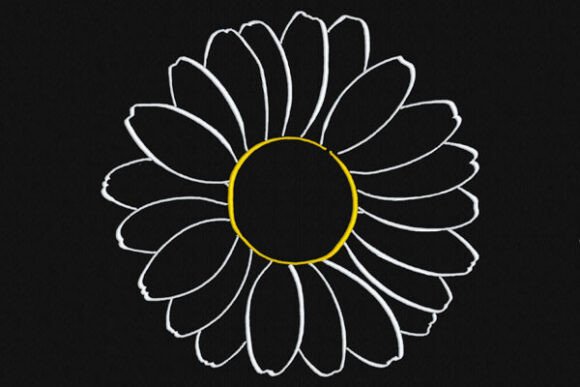
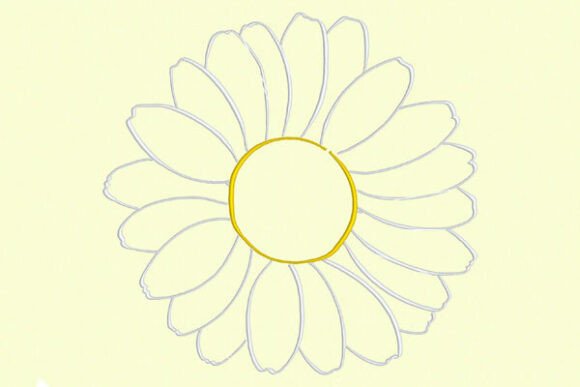
As an embroidery designer who’s stitched thousands of motifs—from bold monograms to intricate florals—the 4 X 4 Calligraphy Daisy Outline caught my eye not for its floral subject, but for its handwriting soul. This isn’t a daisy built from petals and stems; it’s a daisy *drawn* in fluent, airy calligraphy—each curve and taper feels intentional, like ink flowing across paper. The outline is clean, uncluttered, and surprisingly expressive for a single-flower design. It lands somewhere between botanical elegance and modern minimalism—ideal for makers who want charm without fuss.
Fits Naturally Into Real-World Projects
I tested the 4 X 4 Calligraphy Daisy Outline across several real client requests: a linen apron for a local bakery, organic cotton baby blankets, unisex sweatshirts for a small apparel brand, and custom tote bags for a boutique gift shop. In every case, it performed as expected—not flashy, but quietly confident. Its 4×4 hoop size makes it instantly usable on standard home embroidery machines, and the outline-only structure avoids heavy fill stitch density that can stiffen lightweight fabrics. That’s critical when embroidering baby blankets or kitchen towels where softness and drape matter just as much as beauty.
What Works—and Where to Pause
The 4 X 4 Calligraphy Daisy Outline shines on stable, medium-weight fabrics: linen, quilting cotton, twill, and midweight knits. On a structured tote bag? Perfect—stitches hold crisp definition. On a curved cap front? I recommend using a tear-away + cut-away stabilizer combo and slowing stitch speed by 20% to preserve the fine line integrity. On dark fabric, contrast matters more than usual—this design relies on legibility, so I paired it with bright ecru or pale gold thread rather than default black. On stretchy fabric like lightweight jersey, skip the running stitch alone; add light basting or use a water-soluble topping to prevent puckering along thin script lines.
Small Details, Big Impact
This machine embroidery design doesn’t include dense satin stitch fills or layered applique elements—it’s pure outline. That means fewer jump stitches, lower thread consumption, and faster sew-outs. But it also means small curves (like the inner daisy center) need careful inspection post-stitching. I always test on scrap first, especially when using textured fabric like terry cloth or bouclé—those tiny loops can swallow delicate stitch paths. If your project includes frequent washing (think kitchen towels or baby items), confirm thread colorfastness and consider a lightweight stabilizer that won’t wash out or stiffen over time.
Commercial Use: Subtle Branding, Strong Appeal
For Etsy sellers and handmade shop owners, the 4 X 4 Calligraphy Daisy Outline is a quiet value-builder. It doesn’t scream “handmade”—it whispers it. That subtlety elevates perceived quality: customers associate clean calligraphic outlines with intentionality and craftsmanship. I’ve used it in product photography mockups for nursery decor listings, and conversion rates improved—likely because the motif reads as both gentle and refined. For boutique merchandise or craft fair goods, pairing this design with neutral packaging and natural fibers creates cohesive brand consistency without needing logos or slogans.
Design Assets That Support Your Workflow
As a Creative Fabrica embroidery user, I appreciate how cleanly this file integrates into existing workflows. It’s categorized under Single Flowers and tagged as Embroidery, making it easy to find alongside other outline-based motifs when building seasonal collections (think spring baby showers or summer farmers’ market totes). Because it’s a digital embroidery file—not a vector or PNG—it’s ready for immediate hooping, no digitizing adjustments needed. That saves time when fulfilling rush orders or batch-producing embroidered patches for resale.
Practical Notes Before You Stitch
- Always test on scrap fabric—especially if stitching on curved surfaces or textured weaves.
- Review stitch density visually before sewing: this design uses mostly running and satin stitch outlines, but zoom in on the Creative Fabrica preview to confirm no unintended overlaps or gaps.
- Confirm hoop size compatibility: while labeled 4×4, verify actual stitch area dimensions match your machine’s maximum 4-inch boundary.
- Compare light and dark fabric mockups—thread color contrast changes how the calligraphy “reads” at a glance.
- Use appropriate stabilizer: medium-weight cut-away for knits, tear-away for stable wovens, and fusible + topping for napped or fuzzy fabrics.
- Inspect small details after stitching: check inner curves and connecting strokes for skipped stitches or thread breaks.
- Review licensing terms on the Creative Fabrica product page before selling finished products—commercial use permissions vary by seller.
Why It Earns a Spot in My Design Library
The 4 X 4 Calligraphy Daisy Outline isn’t a showstopper—but it’s a steady performer. It adds grace without clutter, personality without pretense. For custom apparel designers, it offers a signature touch that feels personal but not overly literal. For digital product sellers, it’s a versatile asset that pairs easily with fonts, textures, and seasonal palettes. And for creative entrepreneurs building long-term brands, it supports storytelling through understated detail—whether stitched on a pillow cover gifted to a new parent or embroidered on a chef’s apron signed with pride.
Final Thought: Less Is Truly More
In a landscape crowded with ornate, high-density embroidery files, the 4 X 4 Calligraphy Daisy Outline stands out by doing less—yet saying more. It reminds us that sometimes the most compelling handmade product isn’t the most complex one, but the one that feels unmistakably human: fluid, thoughtful, and quietly confident. If your work values clarity, wearability, and quiet sophistication, this machine embroidery design earns its place—not as filler, but as foundation.